Learn more about our API products here. Fill out the form below to get early access to our API products.
DD AI is Webacy’s agent-forward onchain risk intelligence platform, giving people, businesses, and AI agents instant access to live asset, wallet, transaction, and protocol analysis through chat, MCP, APIs, and x402 payments.
Webacy is partnering with CertiK to enhance vulnerability triage, surface high-quality security findings, and strengthen its defense-in-depth cybersecurity strategy.
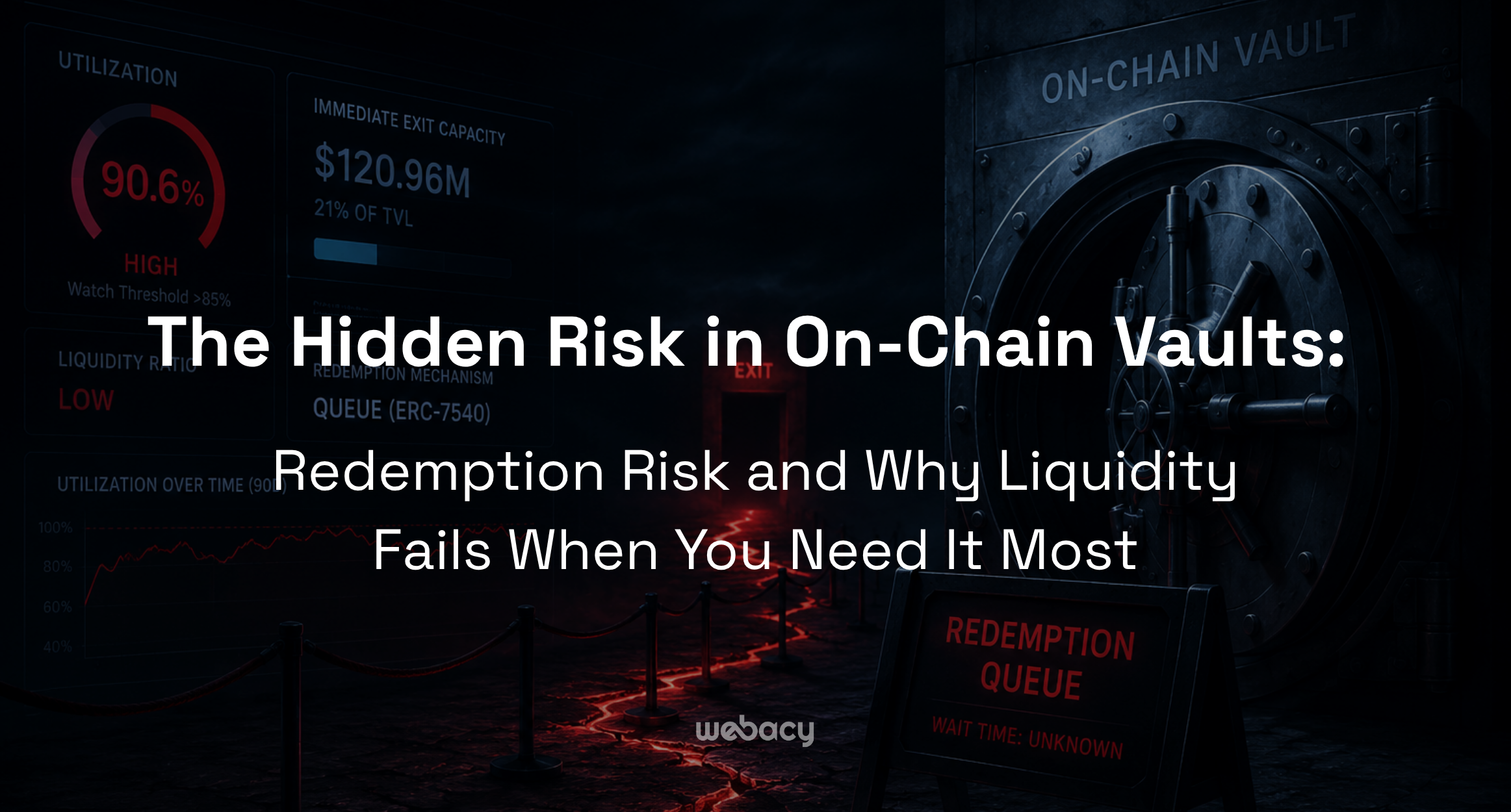
Redemption risk is one of the most overlooked dangers in on-chain vaults, where high utilization, limited liquidity, and queued withdrawals can prevent investors from exiting when markets turn volatile.
Explore how Mastercard and Circle are expanding stablecoin settlements and what it means for faster, lower-cost global payments.
The crypto stablecoin bill Senate vote (GENIUS Act) marks a major step toward regulating digital assets in the United States. It signals a shift toward clearer oversight as stablecoins become a core part of modern financial systems.
Agentic payment and asset-management systems have built a control layer to govern what AI agents are authorized to do, but they still lack a risk layer to tell them whether the stablecoins, vaults, and counterparties they're settling into are actually safe at the moment of execution.
S&P and Moody's brought ratings onchain, but they're still periodic, issuer-informed opinions. Here's what that misses about what actually happens onchain.
Agent payment stacks verify identity, authority, and counterparties. None verify the stablecoin itself. Inside the asset-integrity gap in agentic payments.
Wallet guardrails control what an AI agent can do, not whether the asset is safe. Why agentic payments need a real-time asset risk layer.
A CTO's H1 recap dissecting six 2026 stablecoin collapses to show that the failure mechanism — not the size of the depeg — determines whether holders recover, and how Webacy built a dedicated pre-price sensor for each way a peg breaks.
Real-time stablecoin depeg monitoring that warns you before the price breaks and automates the audit trail for treasury, risk, and compliance teams. Suggested Slug: /blog/stablecoin-depeg-monitoring
A research post-mortem of Main Street Finance's June 2026 collapse — and why the design, not the trigger, is the story.
Vault curator due diligence in 10 questions. What to ask about recursive leverage, exit liquidity, oracles, and conflicts before deploying capital.
Liquidity risk in DeFi is the danger that a token can't be bought or sold without severe price impact, or can't be exited at all, driven by onchain conditions like thin pools, unlocked LP tokens, and concentrated ownership that can change in a single transaction.