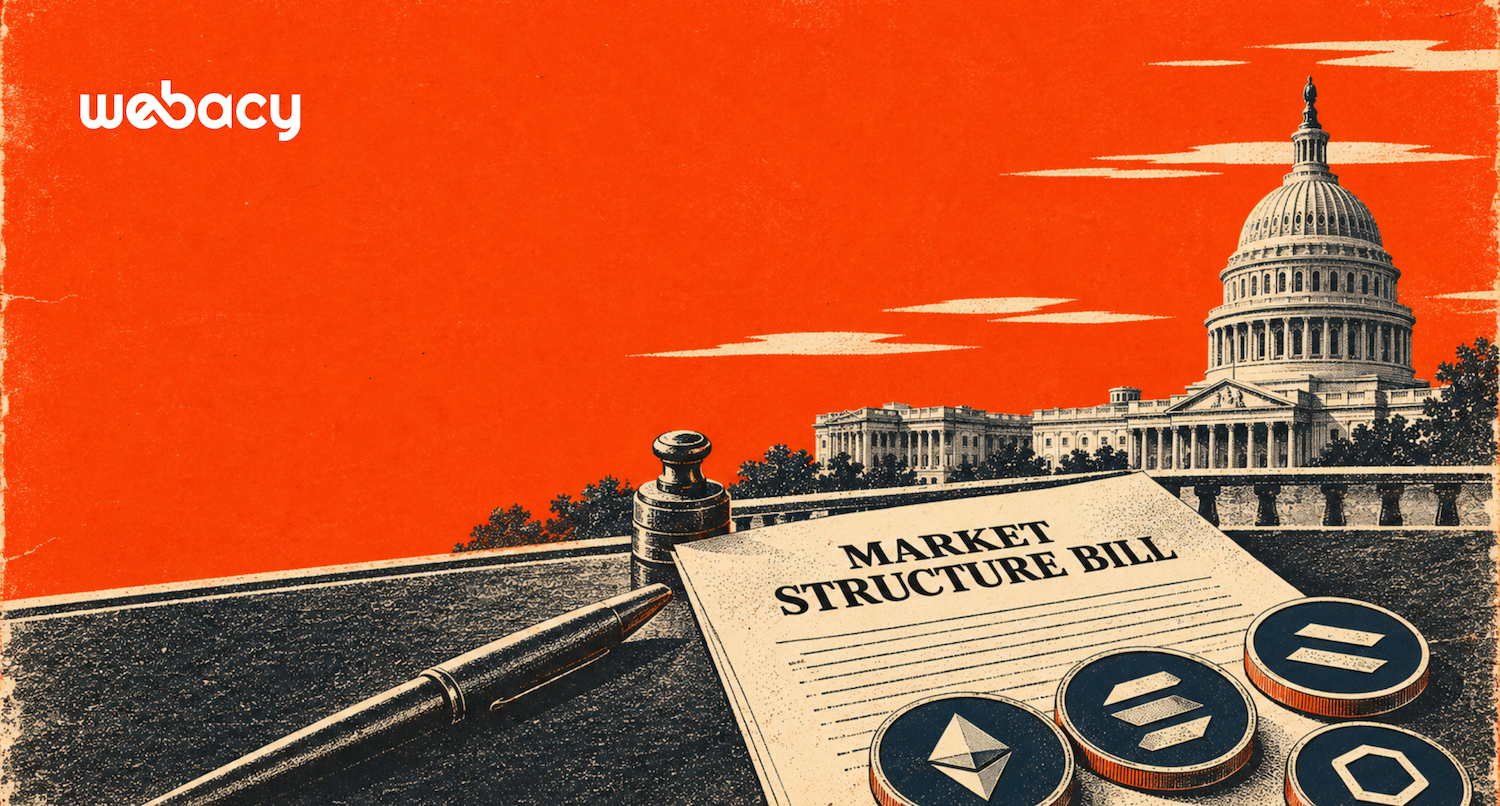
The crypto stablecoin bill Senate vote (GENIUS Act) marks a major step toward regulating digital assets in the United States. It signals a shift toward clearer oversight as stablecoins become a core part of modern financial systems.
What Is the Crypto Stablecoin Bill?

The stablecoin legislation (GENIUS Act) aims to establish a clear regulatory framework for how they are issued, backed, and managed within the United States. At its core, the bill is designed to bring structure to a fast-growing sector that has, until now, operated in a relatively fragmented regulatory environment.
Key Objectives of the Senate Stablecoin Bill
The legislation focuses on several primary goals:
- Consumer protection by ensuring stablecoins are fully backed and redeemable
- Financial stability by reducing systemic risk in digital asset markets
- Transparency through required disclosures and reserve reporting
- Regulatory clarity for issuers, exchanges, and institutions
By addressing these areas, lawmakers aim to reduce uncertainty while encouraging responsible innovation in the crypto space.
Key Highlights From the Senate Stablecoin Bill Vote

The crypto stablecoin bill Senate vote marks a pivotal moment for digital asset regulation. While details are still evolving, it signals that stablecoins are now a top priority for U.S. lawmakers, with growing bipartisan support for a unified regulatory framework.
More importantly, it reflects a shift in perception—stablecoins are no longer seen as niche assets, but as critical financial infrastructure with real impact on markets, payments, and institutional finance.
Core Provisions of the Senate Bill

To fully understand the impact of the legislation, it’s important to examine the core requirements that are likely to shape the future of stablecoins.
Reserve Requirements
The bill requires stablecoin issuers to maintain high-quality, liquid reserves that fully back tokens in circulation. These reserves typically include U.S. dollars, short-term Treasuries, and other low-risk assets to help ensure a consistent 1:1 peg—even during market stress.
Mandatory Disclosures and Audits
Transparency is a key focus, with issuers expected to provide regular reserve disclosures and undergo independent audits. These standards aim to build trust by ensuring assets are fully backed and clearly reported.
Licensing and Oversight
The legislation introduces stricter rules on who can issue stablecoins and how they are supervised. Issuers may need federal or state licensing, with regulators given clearer authority to oversee operations and reduce systemic risk.
Redemption Rights
Holders must be able to redeem tokens for fiat at a 1:1 ratio. Clear redemption processes are required to maintain confidence and ensure reliability, even during periods of financial stress.
What This Means for Stablecoins Like USDC

For established stablecoins such as USDC, the legislation could represent both an opportunity and a challenge.
Increased Trust and Legitimacy
Stablecoins that already emphasize transparency, reserve backing, and regulatory alignment are likely to benefit. Clear rules can strengthen user confidence and encourage broader adoption.
Higher Compliance Expectations
At the same time, issuers will need to meet stricter operational and reporting standards. This could increase costs and require more robust infrastructure.
Competitive Differentiation
The new framework may separate stablecoins into those that meet regulatory standards and gain institutional trust, and those that struggle to comply and face reduced adoption or exit—ultimately reshaping the competitive landscape.
Impact on the Broader Crypto Ecosystem
- For Investors and Traders: Stronger regulation can improve confidence in stablecoins by reducing depegging risk and increasing market stability during volatility.
- For DeFi Platforms: DeFi protocols may face tighter compliance expectations, pushing them toward greater transparency and more structured risk management practices.
- For Institutions: Clearer regulatory guidance can accelerate institutional adoption by making stablecoins easier to integrate into payments, treasury, and settlement systems.
Risks and Challenges Still Ahead

While regulation provides structure, it does not eliminate all risks associated with stablecoins. Market dynamics, technological vulnerabilities, and external economic factors can still introduce instability. As a result, participants must remain vigilant and adapt to both regulatory changes and evolving on-chain conditions.
Regulatory Fragmentation
Global markets operate across jurisdictions, and differences between U.S., European, and other regulatory frameworks can create complexity for issuers and users. This fragmentation may lead to compliance challenges and uneven competitive conditions across regions.
Innovation vs. Compliance
Stricter rules may slow experimentation in certain areas of crypto, but they can also reduce the risk of major failures. As a result, developers will need to balance innovation with regulatory expectations.
Implementation and Enforcement
The timeline and rigor of enforcement remain key questions. How quickly and consistently new rules are applied will ultimately determine their real-world impact.
Why Stablecoin Risk Goes Beyond Regulation
Even with strong regulatory frameworks in place, stablecoins exist within a broader, highly interconnected ecosystem.
Risks can emerge from:
- Liquidity disruptions across exchanges
- Sudden movements by large holders
- Exposure to high-risk DeFi protocols
- Smart contract vulnerabilities
- Oracle failures or bridge exploits
In other words, regulation addresses structural risk—but not dynamic, real-time risk across the blockchain ecosystem.
Where Webacy Fits In: Turning Regulation Into Action

As stablecoins move into a more regulated environment, compliance is only part of the equation—the real challenge is managing risk in real time. Webacy helps users, institutions, and digital asset teams gain visibility across wallets, protocols, and counterparties, enabling proactive monitoring through real-time risk tracking, liquidity intelligence, and smart contract analysis.
By surfacing early warning signals across the blockchain ecosystem, Webacy empowers users to identify threats early and act before they escalate.
As the crypto stablecoin bill Senate vote establishes a clearer regulatory framework, tools like Webacy become essential for navigating both compliance and ongoing ecosystem risk. At the same time, stablecoins are evolving into core financial infrastructure—powering payments, settlements, tokenized assets, and institutional operations—marking a broader shift from experimentation to regulation and increasing responsibility across the digital asset landscape.
Frequently Asked Questions (FAQs)
What is the crypto stablecoin bill Senate vote?
It refers to U.S. legislation aimed at regulating how stablecoins are issued, backed, and monitored.
Does this mean stablecoins are fully regulated now?
Not yet. The vote is a major step forward, but full implementation will take time and additional rulemaking.
Will this affect stablecoins like USDC?
Yes. Compliant stablecoins may benefit from increased trust, while others may face stricter scrutiny.
Protect Your Stablecoin Strategy With Webacy
Understanding regulation is only part of the equation—true confidence comes from proactive protection. Webacy helps crypto users, institutions, and digital asset teams monitor stablecoin risk, detect early warning signs, strengthen security, and stay ahead of evolving regulations, providing the tools needed to operate with confidence.
Don’t just adapt to regulation—stay ahead of it. Explore Webacy and our capabilities today.