April’s wave of DeFi exploits and stablecoin stress events revealed a harsh reality: AI-accelerated attackers are outpacing defenders, making real-time contagion monitoring, redemption risk analysis, governance surveillance, and digital asset risk intelligence essential infrastructure for institutional on-chain finance.

A real-time, continuous rating system for digital assets that surfaces hidden on-chain structural risks—across stablecoins, vaults, and protocols—before they cascade into systemic failures.

A proposed version of Section 302 outlined sanctions screening, transaction monitoring, and risk-based controls for onchain application layers, offering an early blueprint for how risk intelligence could become embedded directly into digital asset transactions.

Agentic payment and asset-management systems have built a control layer to govern what AI agents are authorized to do, but they still lack a risk layer to tell them whether the stablecoins, vaults, and counterparties they're settling into are actually safe at the moment of execution.

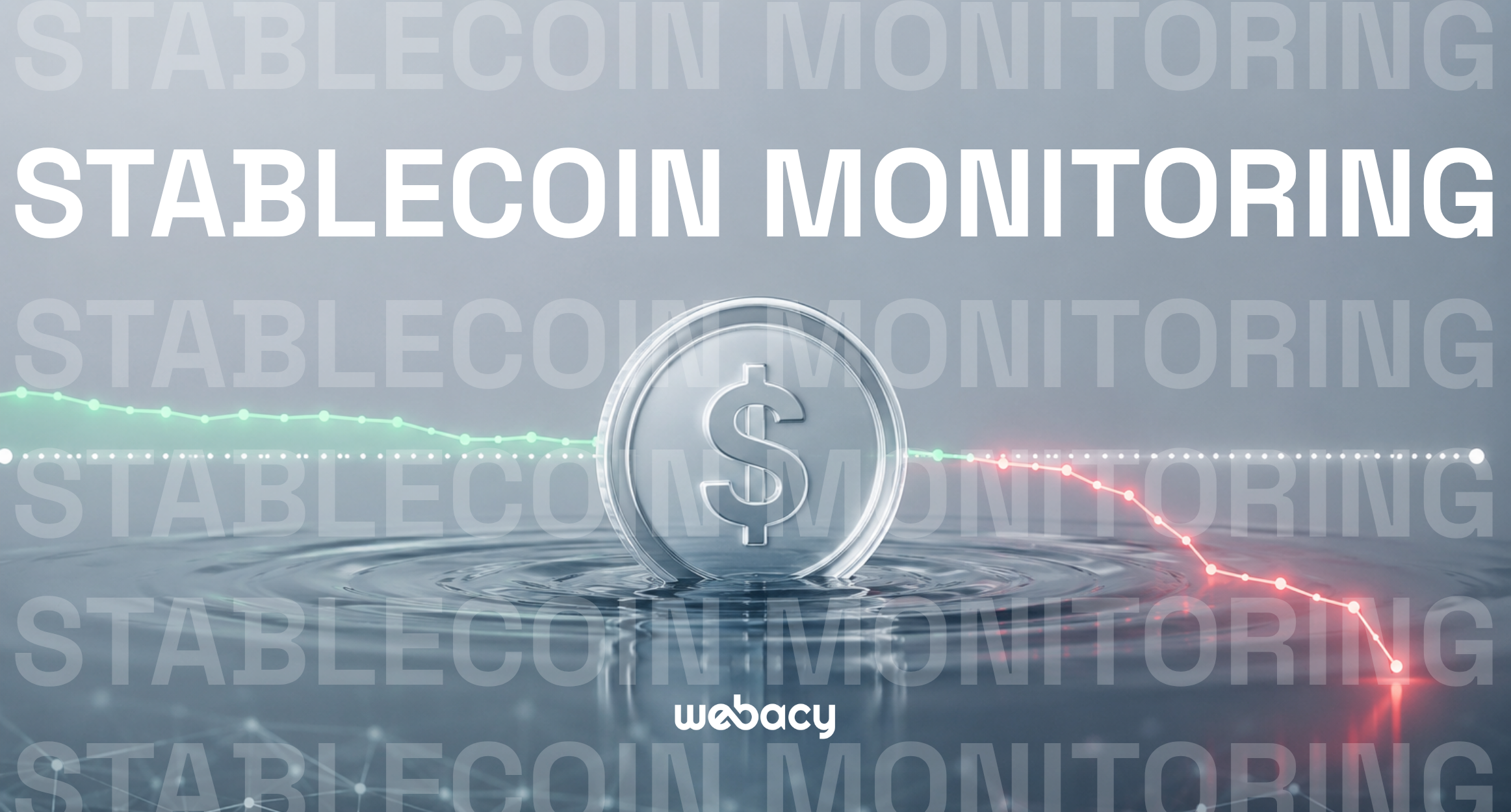
A CTO's H1 recap dissecting six 2026 stablecoin collapses to show that the failure mechanism — not the size of the depeg — determines whether holders recover, and how Webacy built a dedicated pre-price sensor for each way a peg breaks.

Liquidity risk in DeFi is the danger that a token can't be bought or sold without severe price impact, or can't be exited at all, driven by onchain conditions like thin pools, unlocked LP tokens, and concentrated ownership that can change in a single transaction.