Learn more about our API products here. Fill out the form below to get early access to our API products.
Stablecoins can fail for very different reasons despite showing the same price signal, and by monitoring collateral health, liquidity depth, supply flows, and structural market risks in real time, Webacy helps institutions identify, explain, and respond to depeg events before they become crises.
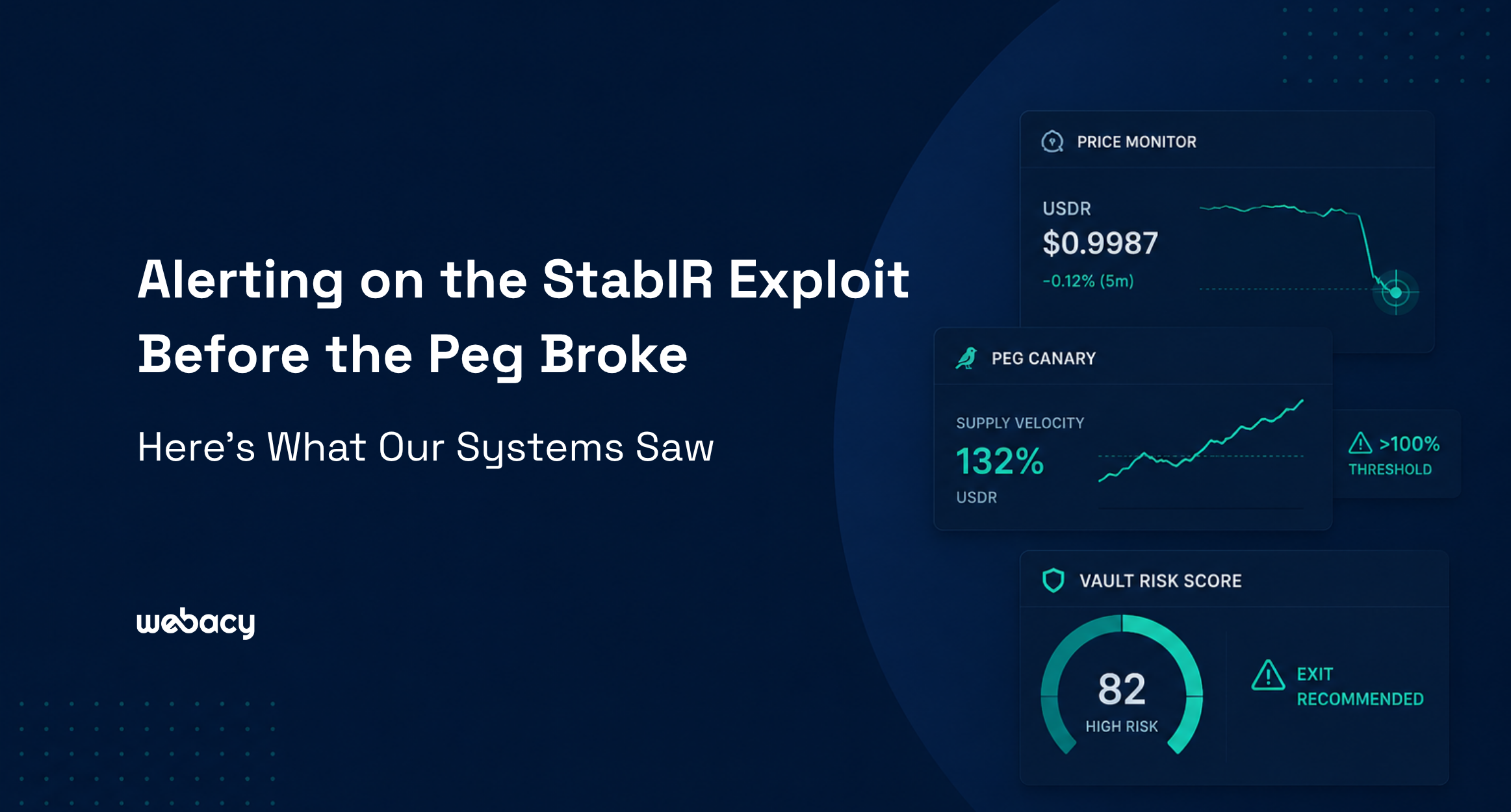
Webacy's real-time stablecoin monitoring systems detected the $13.5M StablR exploit, flagging anomalous supply velocity and price deviation signals before the peg broke, continuing a track record that includes catching the Resolv USR depeg 2 hours and 17 minutes before the official announcement.
As AI agents begin interacting directly with financial systems, one major problem is becoming increasingly obvious: AI does not natively understand digital asset risk.
Pre-sign transaction scanning evaluates blockchain transactions before execution. Learn why policy-aware infrastructure is now essential for compliance, AI agents, and institutional finance.
A practical guide to on-chain data and blockchain threat intelligence APIs — what each category covers, where gaps persist, and what institutional risk teams actually need.
A complete framework for evaluating stablecoin risk and on-chain asset integrity — peg mechanisms, reserve quality, smart contract exposure, and contamination risk.
Explore where DeFi vault yields come from through an analysis of $4.34 billion in Morpho vaults, examining lending interest, token incentives, shared market exposure, and liquidity risk.
DD AI is Webacy’s agent-forward onchain risk intelligence platform, giving people, businesses, and AI agents instant access to live asset, wallet, transaction, and protocol analysis through chat, MCP, APIs, and x402 payments.
Why a fully reserved stablecoin can still face redemption, banking, and payment-rail liquidity risk, and what issuers, institutions, and regulators should monitor in real time.
A proposed version of Section 302 outlined sanctions screening, transaction monitoring, and risk-based controls for onchain application layers, offering an early blueprint for how risk intelligence could become embedded directly into digital asset transactions.
What the reUSD liquidations on Morpho teach us about leverage, liquidity and better onchain risk controls
Webacy is partnering with CertiK to enhance vulnerability triage, surface high-quality security findings, and strengthen its defense-in-depth cybersecurity strategy.
Webacy Achieves SOC 2 Compliance, Strengthening Its Commitment to Security, Trust, and Protection of Customer Data Through Independent Third-Party Validation.
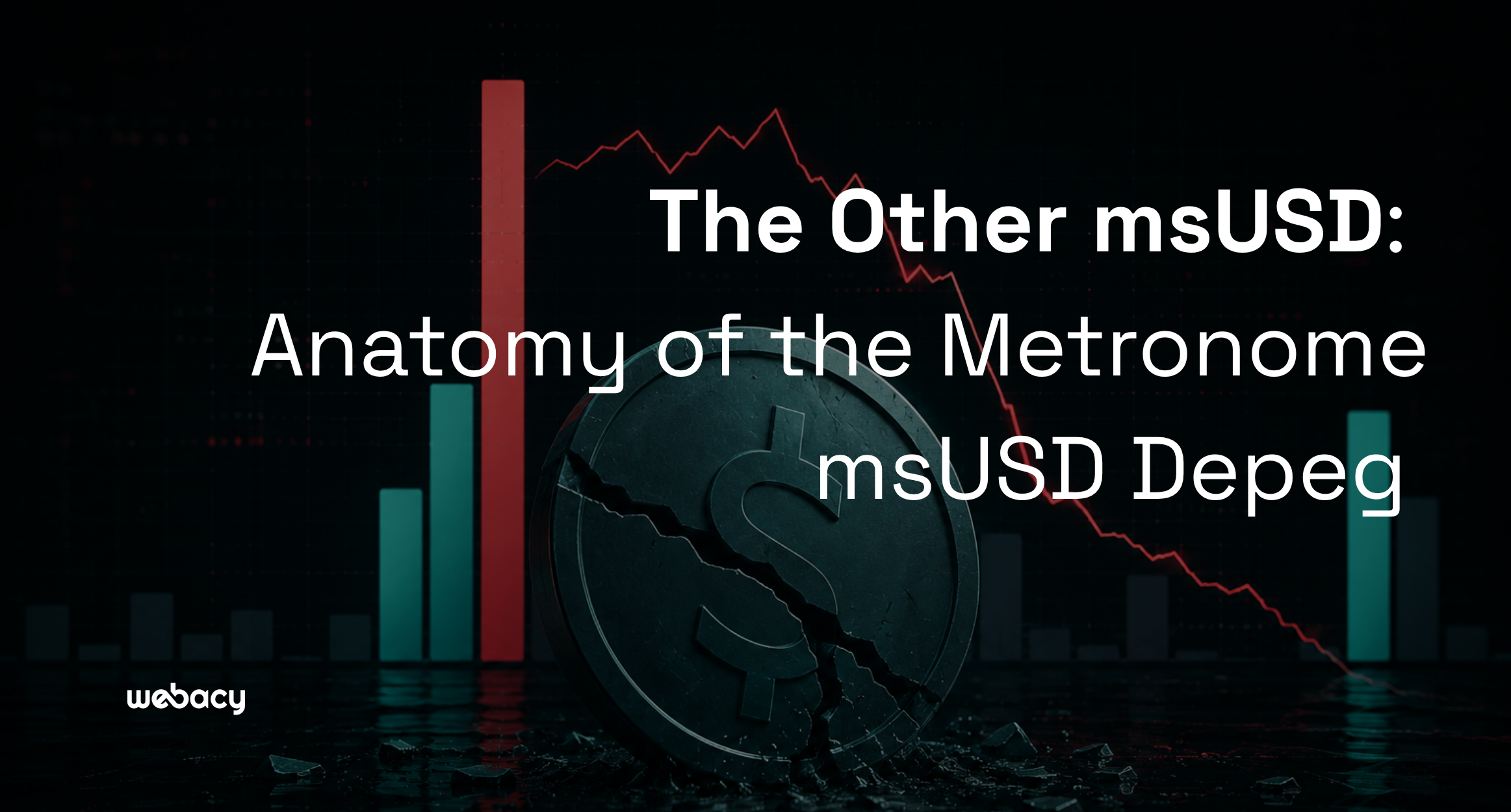
A deep dive into how Metronome's msUSD lost its peg, and how on-chain supply expansion, stale oracle pricing, and structural risk signals exposed the depeg long before the market did.