Learn more about our API products here. Fill out the form below to get early access to our API products.
DD AI is Webacy’s agent-forward onchain risk intelligence platform, giving people, businesses, and AI agents instant access to live asset, wallet, transaction, and protocol analysis through chat, MCP, APIs, and x402 payments.
Webacy is partnering with CertiK to enhance vulnerability triage, surface high-quality security findings, and strengthen its defense-in-depth cybersecurity strategy.
Vault curator due diligence in 10 questions. What to ask about recursive leverage, exit liquidity, oracles, and conflicts before deploying capital.
Liquidity risk in DeFi is the danger that a token can't be bought or sold without severe price impact, or can't be exited at all, driven by onchain conditions like thin pools, unlocked LP tokens, and concentrated ownership that can change in a single transaction.
A technical comparison of Morpho Midnight and KPK's ETH Yield Term on Euler showing why fixed-rate DeFi lending does not define risk, and how immutable protocol design versus actively managed rate setting creates fundamentally different risk architectures for institutional allocators.
VARA's latest guidance requires licensed VASPs in Dubai to review and document stablecoin, DeFi, and RWA risk every 90 days, creating a new need for continuous on-chain monitoring and evidence-based risk ratings.
Learn how KPK's ETH Yield Term fixed-rate Euler vault reduces borrow rate volatility while introducing new DeFi lending risks around curator-controlled pricing, benchmark dependency, collateral valuation, and governance that require continuous risk monitoring.
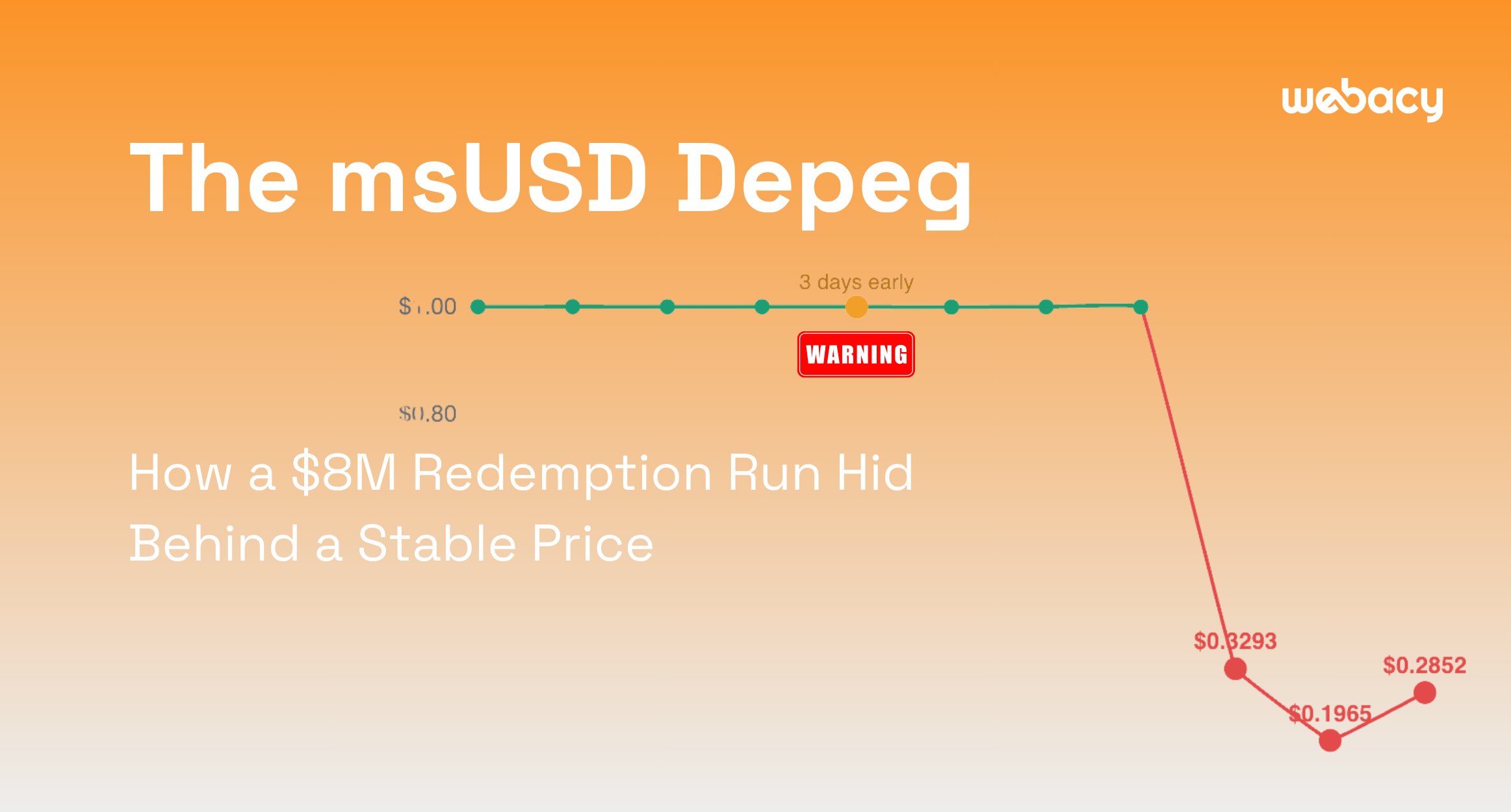
Two coordinated wallets redeemed roughly $8 million of msUSD at par in the five days before its 80% depeg, a redemption run that stayed completely invisible to price-based monitoring but was fully legible onchain through redemption-velocity and wallet-concentration analysis.
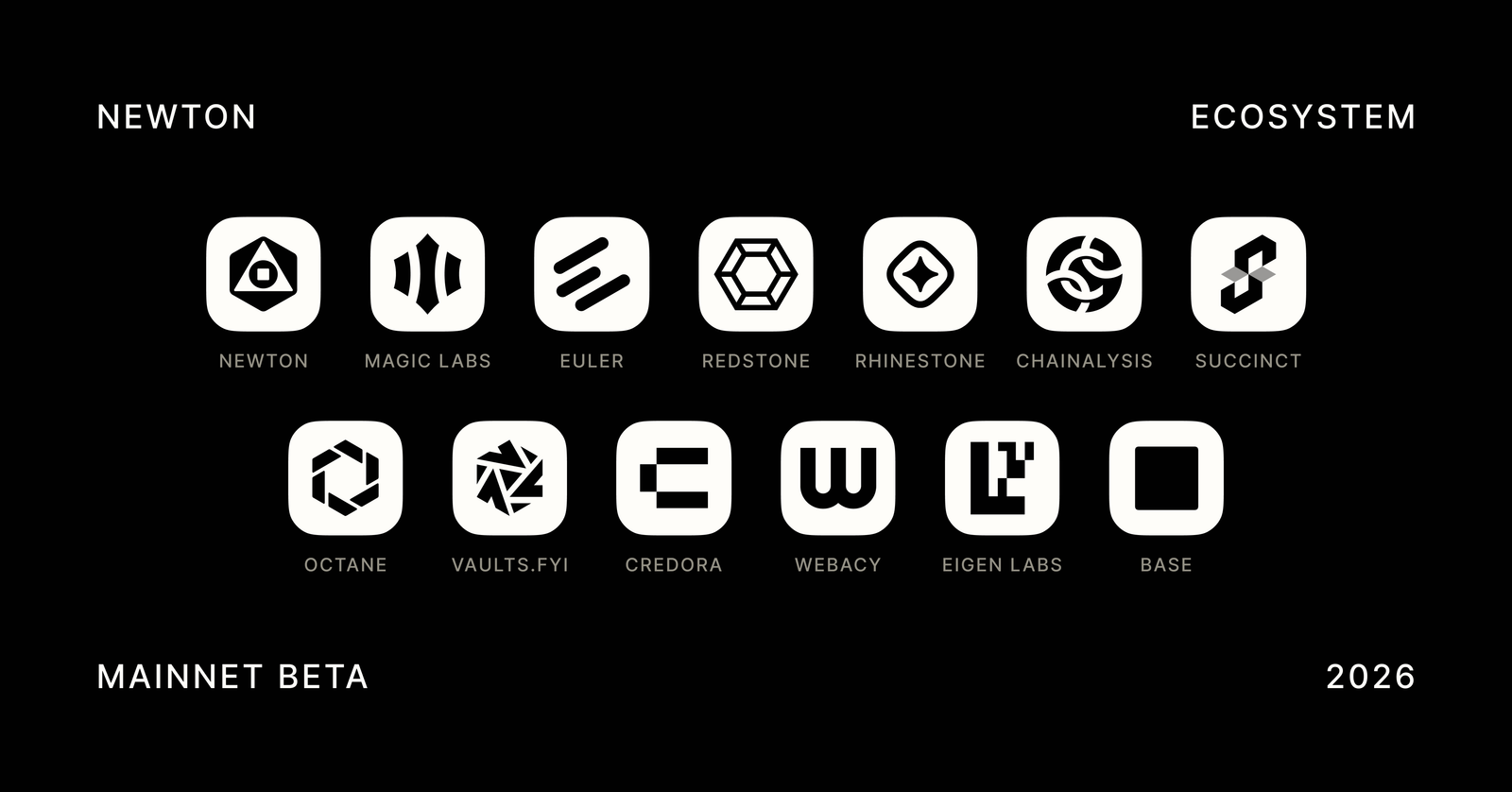
Webacy and Newton's VaultKit integration enables real-time stablecoin depeg monitoring and asset integrity checks, allowing onchain vaults and financial applications to enforce dynamic risk policies before transactions settle.
Webacy is building the ratings infrastructure for digital finance by providing continuous, independent risk ratings for stablecoins, RWAs, vaults, and digital assets, enabling institutions, regulators, and AI agents to assess on-chain asset integrity in real time.
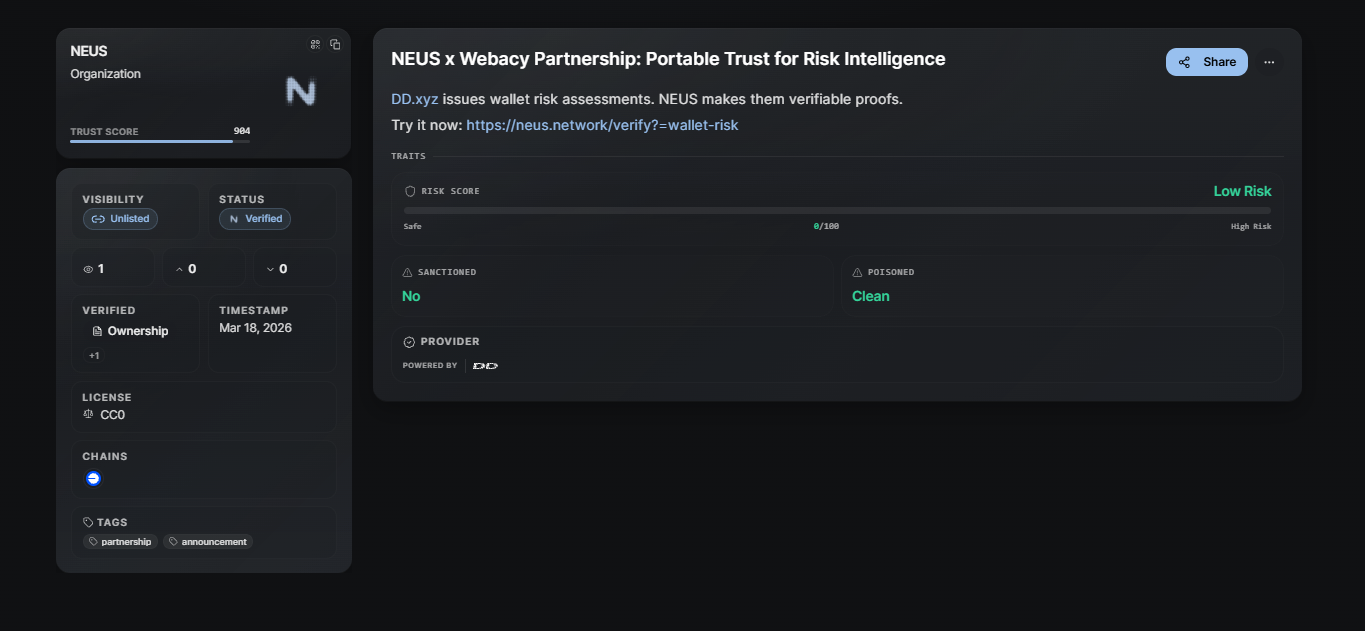
Webacy and NEUS introduce portable onchain trust infrastructure, enabling wallets, apps, and AI agents to share real-time risk assessments and verifiable trust receipts across the ecosystem instead of repeating fragmented security checks at every interaction.
A deep dive into Midnight Protocol's fixed-rate lending architecture, exploring how oracle risk, collateral design, gate contracts, and liquidity constraints create unique structural risks for DeFi and RWA lending markets.
Stablecoins can fail for very different reasons despite showing the same price signal, and by monitoring collateral health, liquidity depth, supply flows, and structural market risks in real time, Webacy helps institutions identify, explain, and respond to depeg events before they become crises.