Learn more about our API products here. Fill out the form below to get early access to our API products.
Webacy is now agent-native. Connect live blockchain risk intelligence to Claude Code, Cursor, and any MCP-compatible agent to screen wallets, tokens, and contracts in real time.
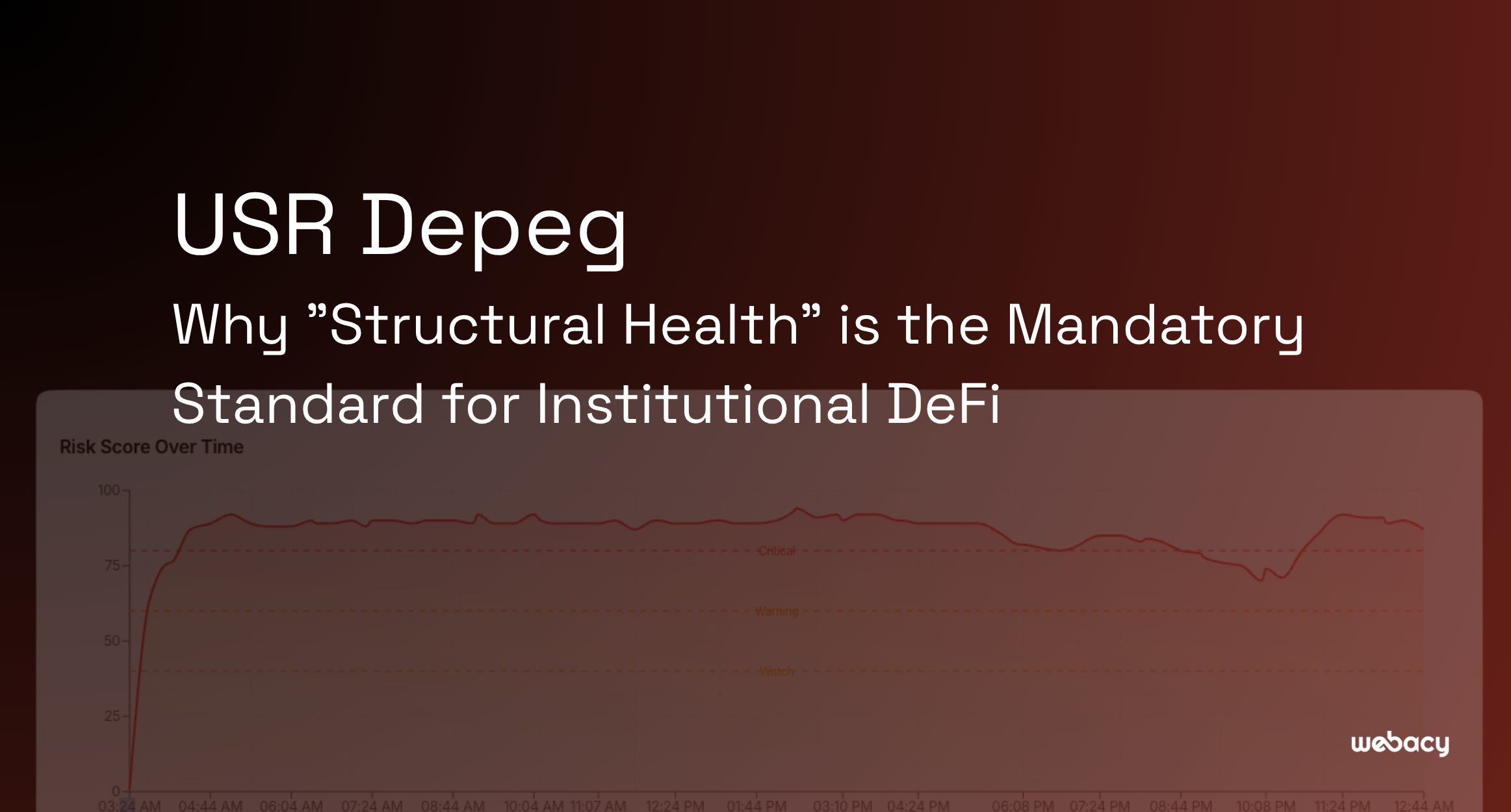
A recent USR stablecoin depeg highlights how institutional DeFi must move beyond price-based metrics and adopt structural health frameworks that evaluate liquidity, collateral design, and systemic resilience to truly assess risk.
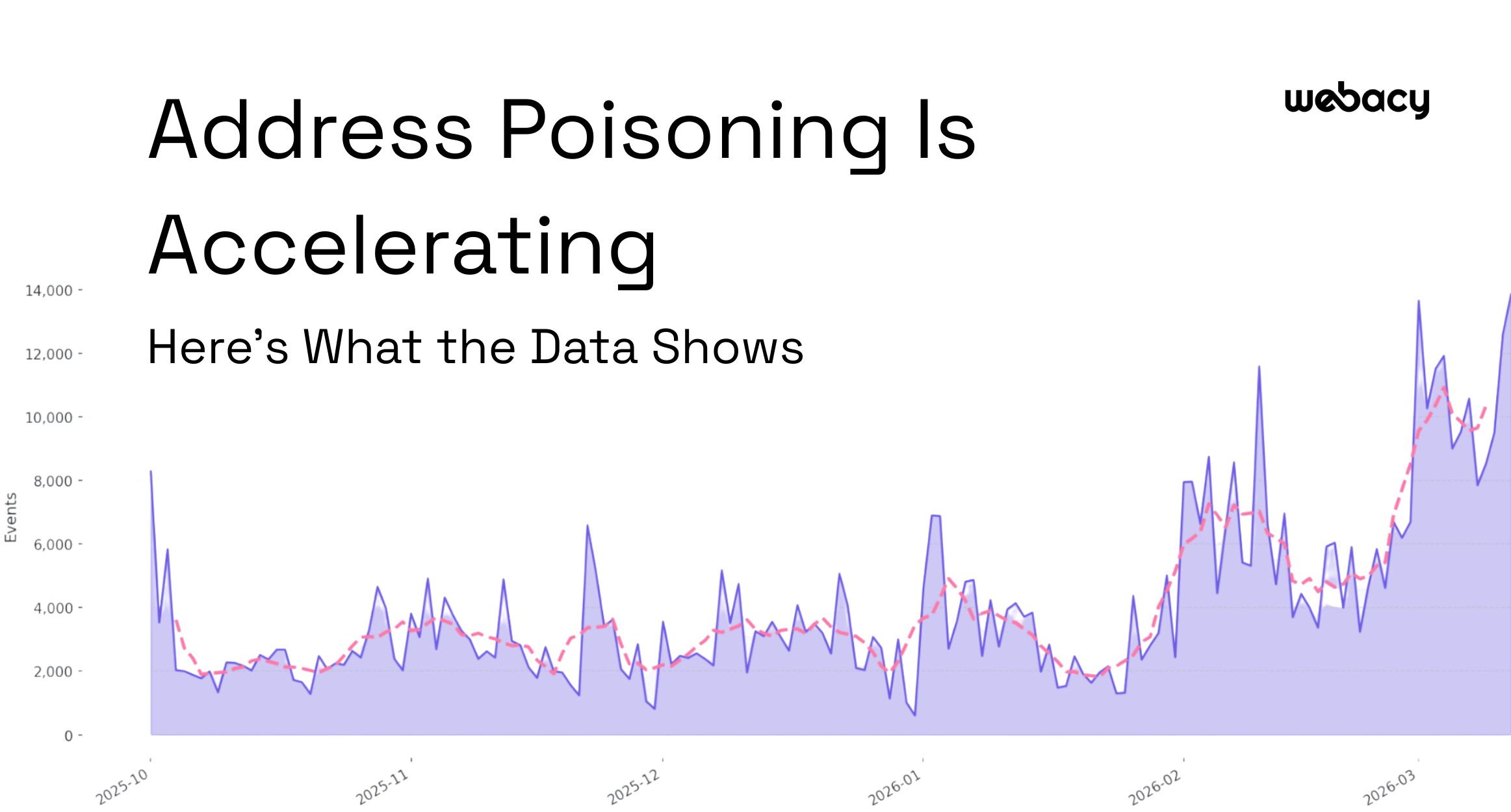
Address poisoning has quadrupled since Q4 2025, and March 2026 is on pace to be the worst month on record.
Vault curator due diligence in 10 questions. What to ask about recursive leverage, exit liquidity, oracles, and conflicts before deploying capital.
Liquidity risk in DeFi is the danger that a token can't be bought or sold without severe price impact, or can't be exited at all, driven by onchain conditions like thin pools, unlocked LP tokens, and concentrated ownership that can change in a single transaction.
A technical comparison of Morpho Midnight and KPK's ETH Yield Term on Euler showing why fixed-rate DeFi lending does not define risk, and how immutable protocol design versus actively managed rate setting creates fundamentally different risk architectures for institutional allocators.
Explore where DeFi vault yields come from through an analysis of $4.34 billion in Morpho vaults, examining lending interest, token incentives, shared market exposure, and liquidity risk.
DD AI is Webacy’s agent-forward onchain risk intelligence platform, giving people, businesses, and AI agents instant access to live asset, wallet, transaction, and protocol analysis through chat, MCP, APIs, and x402 payments.
Why a fully reserved stablecoin can still face redemption, banking, and payment-rail liquidity risk, and what issuers, institutions, and regulators should monitor in real time.
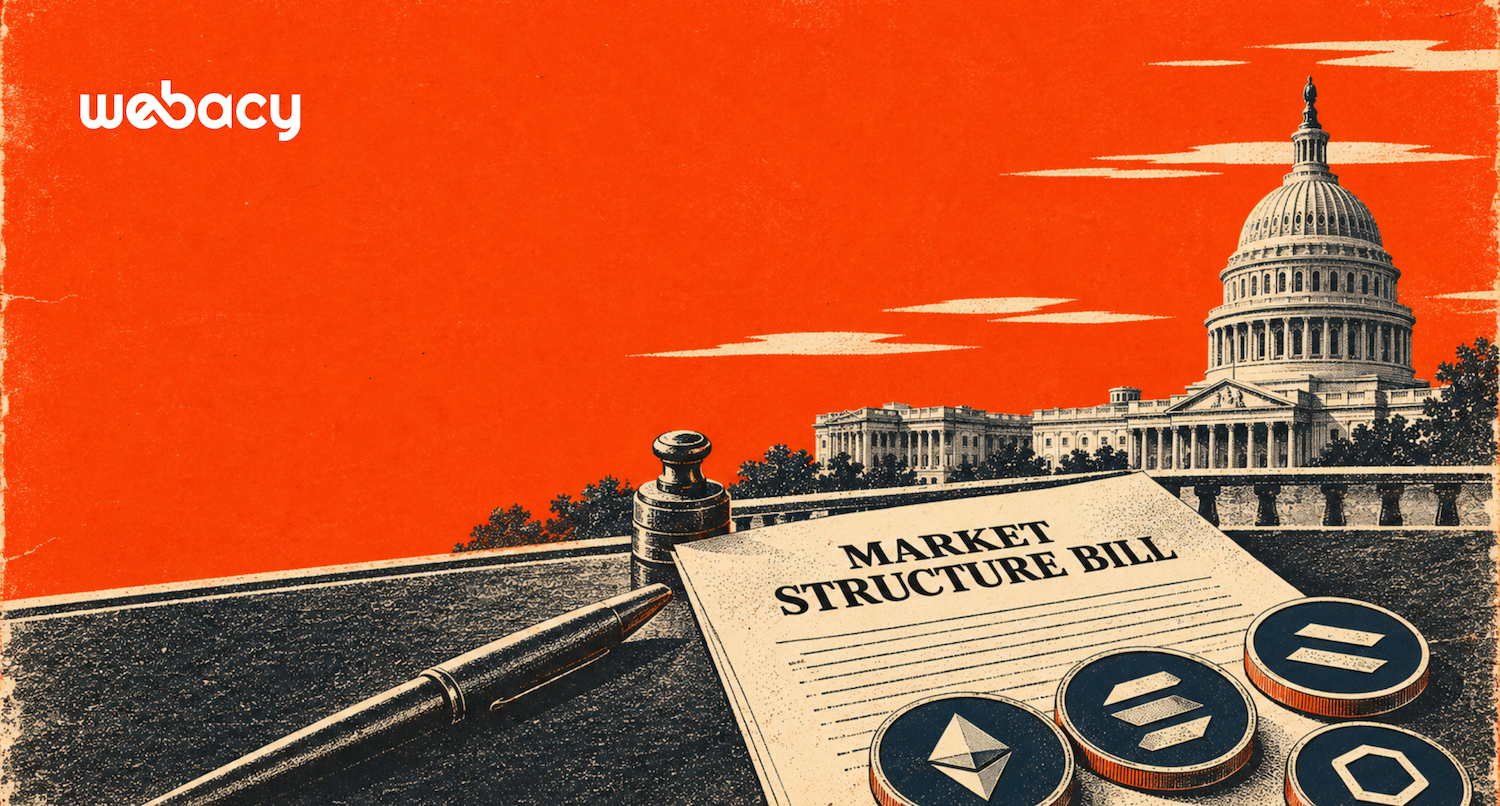
A proposed version of Section 302 outlined sanctions screening, transaction monitoring, and risk-based controls for onchain application layers, offering an early blueprint for how risk intelligence could become embedded directly into digital asset transactions.
What the reUSD liquidations on Morpho teach us about leverage, liquidity and better onchain risk controls
Webacy is partnering with CertiK to enhance vulnerability triage, surface high-quality security findings, and strengthen its defense-in-depth cybersecurity strategy.
Webacy Achieves SOC 2 Compliance, Strengthening Its Commitment to Security, Trust, and Protection of Customer Data Through Independent Third-Party Validation.
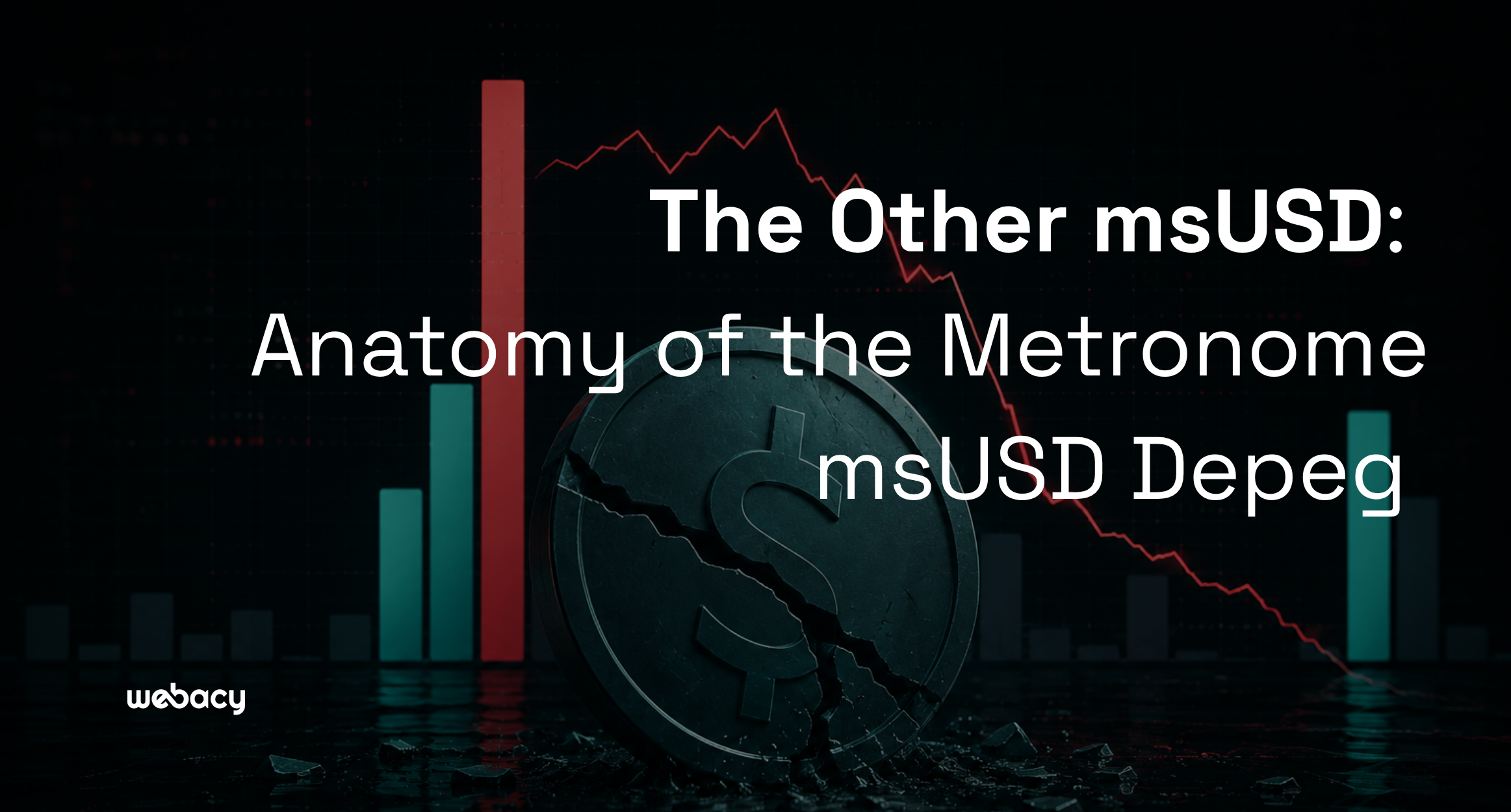
A deep dive into how Metronome's msUSD lost its peg, and how on-chain supply expansion, stale oracle pricing, and structural risk signals exposed the depeg long before the market did.