In the rapidly evolving world of digital assets, stablecoins play a critical role in providing a bridge between volatile cryptocurrencies and traditional fiat money. One of the most widely used of these is USD Coin, commonly known as USDC.
For those new to crypto, the question is simple: Is USDC really stable? The short answer is yes, but to understand why, it helps to look at how stablecoins work and where USDC fits within the broader financial system.
What Is a Stablecoin?

At its simplest, a stablecoin is a type of digital currency designed to maintain a stable value, typically by being pegged to a fiat currency like the U.S. dollar. Unlike Bitcoin or Ether, whose prices can swing wildly over short periods, stablecoins aim to remain steady—hence their name.
Key Characteristics of Stablecoins
To understand how stablecoins function and why they have become foundational to modern digital finance, it is important to examine the core characteristics that distinguish them from other cryptocurrencies.
Stablecoins generally share three defining traits:
- Price Stability: Usually pegged to a stable asset (e.g., USD, EUR, gold). Although, algorithmic stablecoins, like commodity-backed coins exist as well.
- Digital Native: Operate on blockchain networks, enabling fast, programmable transactions.
- Liquidity: Easily exchanged for fiat currency or other digital assets.
These qualities make stablecoins useful for everyday transactions, allowing users to move digital dollars quickly and efficiently.
Additionally, they are commonly used to hedge against market volatility, offering traders and investors a way to temporarily step out of more fluctuating cryptocurrencies while remaining within the digital asset ecosystem.
What Is USDC?

USD Coin (USDC) is a digital stablecoin that is pegged 1:1 to the U.S. dollar. It was launched in 2018 by the Centre Consortium, a partnership between Circle and Coinbase—two of the most respected names in the cryptocurrency industry.
USDC exists on several major blockchains. This multi-chain deployment allows USDC to be used across decentralized finance (DeFi), centralized exchanges, wallets, and payment platforms.
How USDC Maintains Its Stability
What makes USDC a stablecoin isn’t just its 1:1 peg to the U.S. dollar—it’s the structure behind that promise. Stability depends on transparent reserve management, disciplined issuance, and clear redemption mechanisms that support confidence in the system. To maintain its value, USDC relies on a combination of fully backed reserves and independent verification.
Fiat Reserves Backing
USDC is designed so that for every coin issued, there should be an equivalent U.S. dollar—or a dollar-equivalent asset—held in reserve. In practical terms, this means that if there are 1 billion USDC in circulation, there should also be approximately $1 billion worth of liquid assets backing those tokens.
These reserves typically consist of U.S. dollars held in regulated financial institutions, short-term U.S. government securities such as Treasury bills, and other highly liquid cash equivalents intended to preserve capital and maintain immediate redeemability.
Regular Attestations
Unlike some competitors that claim reserves only internally, USDC undergoes regular third-party attestations. These are published by independent accounting firms to verify that USDC reserves match the token supply. This transparency adds a layer of accountability and trust, particularly for institutional investors.
USDC vs. Other Stablecoins
There are several types of stablecoins—and USDC stands out in specific ways.
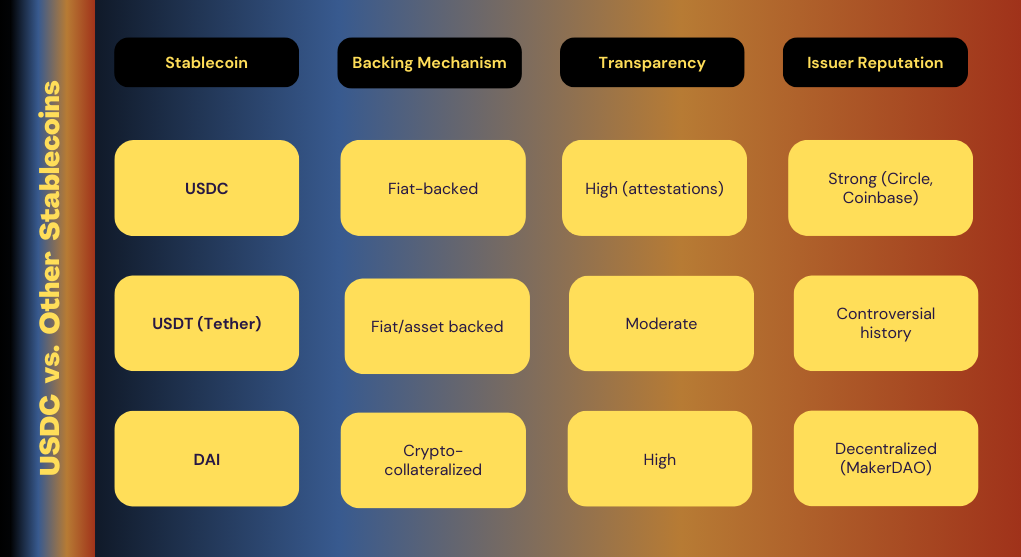
Key differences include:
- USDT (Tether) has faced scrutiny over reserve transparency.
- DAI uses a decentralized collateral pool, resulting in different risk dynamics.
- USDC’s model prioritizes regulated banking assets and verified attestations.
Is USDC Truly “Stable”? Risks and Considerations
USDC is engineered to maintain a consistent 1:1 value with the U.S. dollar, but stability in financial systems is never purely automatic. It depends on sound reserve management, transparent reporting, regulatory clarity, liquidity, and orderly market conditions.
While USDC has generally maintained its peg, informed users should understand the practical risks that could influence its stability.
Reserve Management Risk
The foundation of USDC’s stability is the quality and liquidity of the assets backing it. If reserves were ever mismanaged, inaccurately reported, or exposed to unexpected liquidity constraints, confidence in the peg could weaken.
Regulatory and Legal Risk
Stablecoins now sit at the intersection of banking, securities law, and payments regulation. U.S. policymakers and global regulators have debated stricter frameworks governing issues with USDC stablecoin, reserve requirements, capital standards, disclosures, and consumer protections. Future legislation could alter how stablecoins are issued, custodied, or redeemed.
Market and Liquidity Risk
Even well-collateralized assets can experience short-lived price deviations during periods of extreme market stress. Rapid redemptions, exchange outages, or broader financial instability may cause USDC to trade slightly above or below $1 on secondary markets. Arbitrage mechanisms—where traders buy discounted USDC and redeem it for $1—typically restore the peg quickly.
Counterparty and Banking Risk
Because reserves are held within traditional financial institutions and short-term government instruments, USDC is indirectly exposed to elements of the conventional banking system. Bank failures, settlement delays, or disruptions in money markets could affect liquidity, even if reserves remain intact.
Technology and Operational Risk
As a blockchain-based asset, USDC also depends on the reliability of the networks on which it operates. Smart contract vulnerabilities, network congestion, or cybersecurity incidents affecting exchanges and wallets could impair access or transaction speed, even if the underlying reserves remain sound.
Why USDC Matters in the Broader Financial System
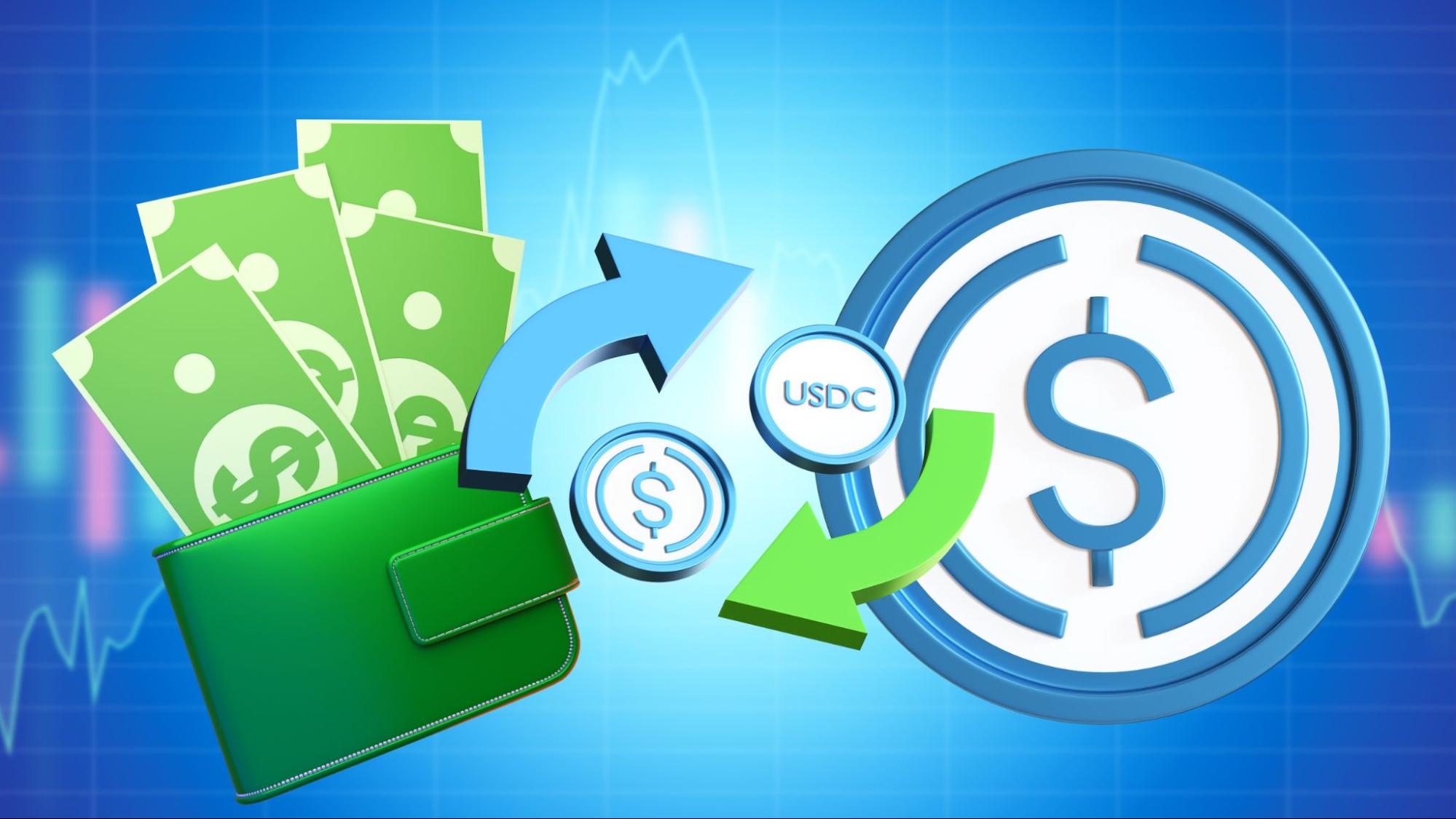
Stablecoins like USDC are not just crypto curiosities. They are becoming integral to a range of financial activities, including:
- Cross-border payments: Faster and cheaper than traditional correspondent banking.
- Decentralized finance (DeFi): Used as collateral, liquidity, and a unit of account.
- Tokenized finance: USDC is used in tokenization platforms for assets like real estate or bonds.
Institutional adoption of USDC has grown steadily, with banks, payment processors, and fintech firms increasingly integrating USDC payment rails into their operations.
These integrations support a range of use cases, including treasury management and liquidity operations, cross-border and corporate payments, and broader digital asset strategies. All are aimed at improving settlement efficiency and expanding participation in tokenized financial ecosystems.
Why Stablecoin Risk Awareness Still Matters
Even when a digital asset is designed to maintain a stable value, stability depends on far more than the reserve backing the token. Stablecoins operate across a complex on-chain ecosystem that includes exchanges, liquidity pools, bridges, lending protocols, market makers, and redemption infrastructure. Risks can emerge anywhere within that network.
For example, a stablecoin’s peg can come under pressure if liquidity dries up across major trading venues, if large holders move funds suddenly, or if risk propagates through DeFi protocols where the asset is used as collateral. Oracle failures, redemption bottlenecks, and exposure to compromised contracts can also create instability that spreads through the broader ecosystem. This is why monitoring stablecoins requires more than simply verifying reserves.
Platforms like Webacy provide risk intelligence that analyzes how stablecoins behave across the blockchain ecosystem in real time. This includes monitoring liquidity conditions across venues, detecting ecosystem contamination from high-risk addresses or contracts, analyzing transaction flows that may signal peg pressure, and identifying risks tied to oracles, bridges, or redemption mechanisms.
As stablecoins become foundational infrastructure for digital finance—supporting trading, payments, and tokenized assets—understanding these systemic signals is increasingly important. Tools that surface early warning indicators across the ecosystem help market participants assess stability more accurately and respond quickly when conditions begin to change.
Frequently Asked Questions (FAQs)
What does “pegged 1:1 to the dollar” mean?
It means 1 USDC is intended to always equal 1 U.S. dollar in value.
How is USDC different from Bitcoin?
Bitcoin’s price fluctuates based on market demand, while USDC aims to stay stable and predictable.
Is USDC safe?
No investment is entirely risk-free, but USDC’s regulated backing and attestations improve stability and trust.
Where can I use USDC?
On exchanges, wallets, DeFi platforms, and increasingly for corporate payments.
Protect Your Stablecoin Strategy With Webacy

Understanding how USDC works is only part of navigating today’s digital asset ecosystem. True financial confidence comes from pairing knowledge with proactive protection.
At Webacy, we help crypto users and digital asset holders strengthen their on-chain safety, monitor wallet risk, and prepare for unexpected events with smart security tools built for the modern economy. Whether you're holding stablecoins like USDC, managing DeFi positions, or building long-term crypto wealth, Webacy provides visibility and protection where it matters most.
Don’t just participate in digital finance—secure it. Visit us today to explore wallet monitoring, risk insights, and proactive crypto protection tools.