Every app that touches onchain assets asks the same question before it acts: is this safe?
For too long, each product answered that question in isolation. A wallet gets assessed by one protocol, that result stays inside that protocol, and the next app starts from scratch. The intelligence doesn't travel.
That changes today.
Webacy and NEUS are partnering to make asset integrity signals portable, so a single, verified risk assessment can travel with a user across every app, gate, and agent that needs to act on it.
What Webacy brings
Webacy's risk engine continuously monitors wallets for exposure across multiple chains. When a wallet connects to a product or an agent prepares to execute, Webacy checks it against a live set of risk signals: sanctions exposure, suspicious transaction patterns, high-risk counterparty activity, contamination from flagged addresses, and much more. The result is a current, structured risk assessment, not a one-time static scan.
This sits within a broader platform that also monitors the structural integrity of onchain financial products like stablecoins, earn products, and RWAs. But for this integration, wallet risk is the signal that matters: is this wallet safe to trust right now, and can that answer travel with the user to the next app?
What NEUS adds
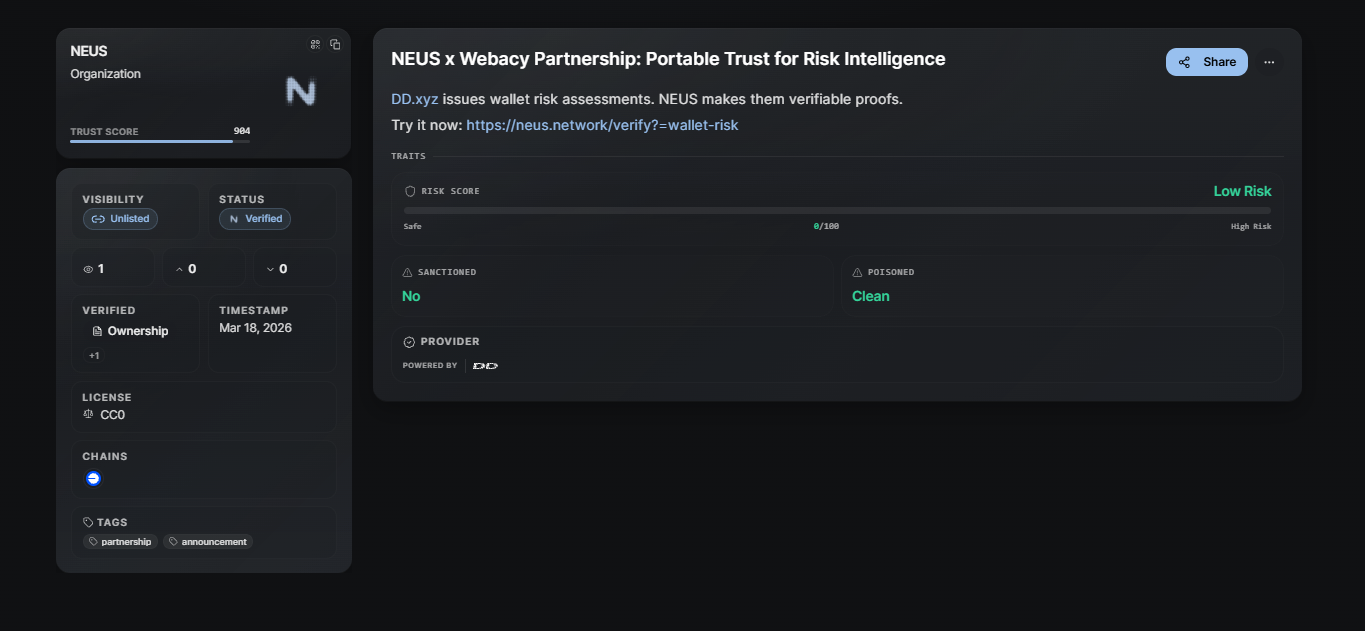
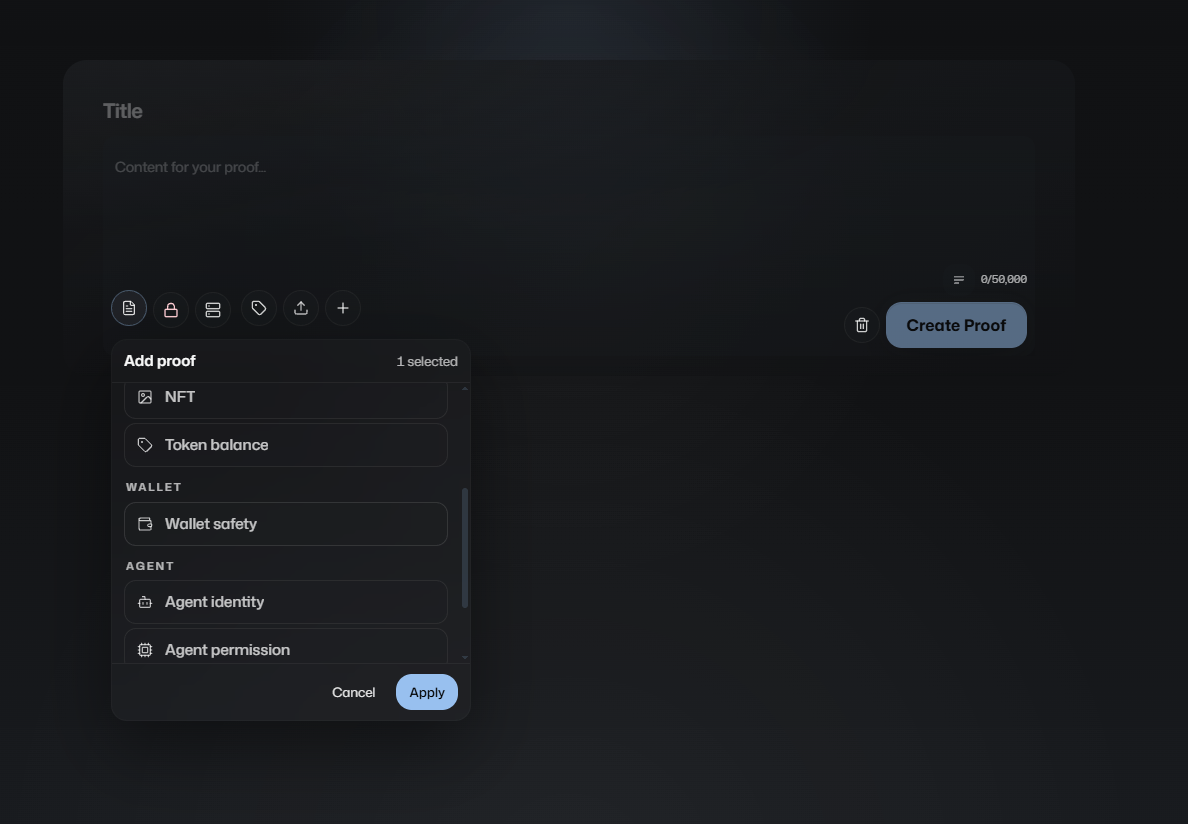
NEUS turns a verified assessment into a portable trust receipt: a cryptographically checkable record tied to a user's NEUS profile. Any app, gate, or AI agent integrated with NEUS can read that receipt instead of running a duplicate check. The result: one authoritative signal, reusable everywhere, with the source clearly attributed.
Why This Matters for the Agentic Web
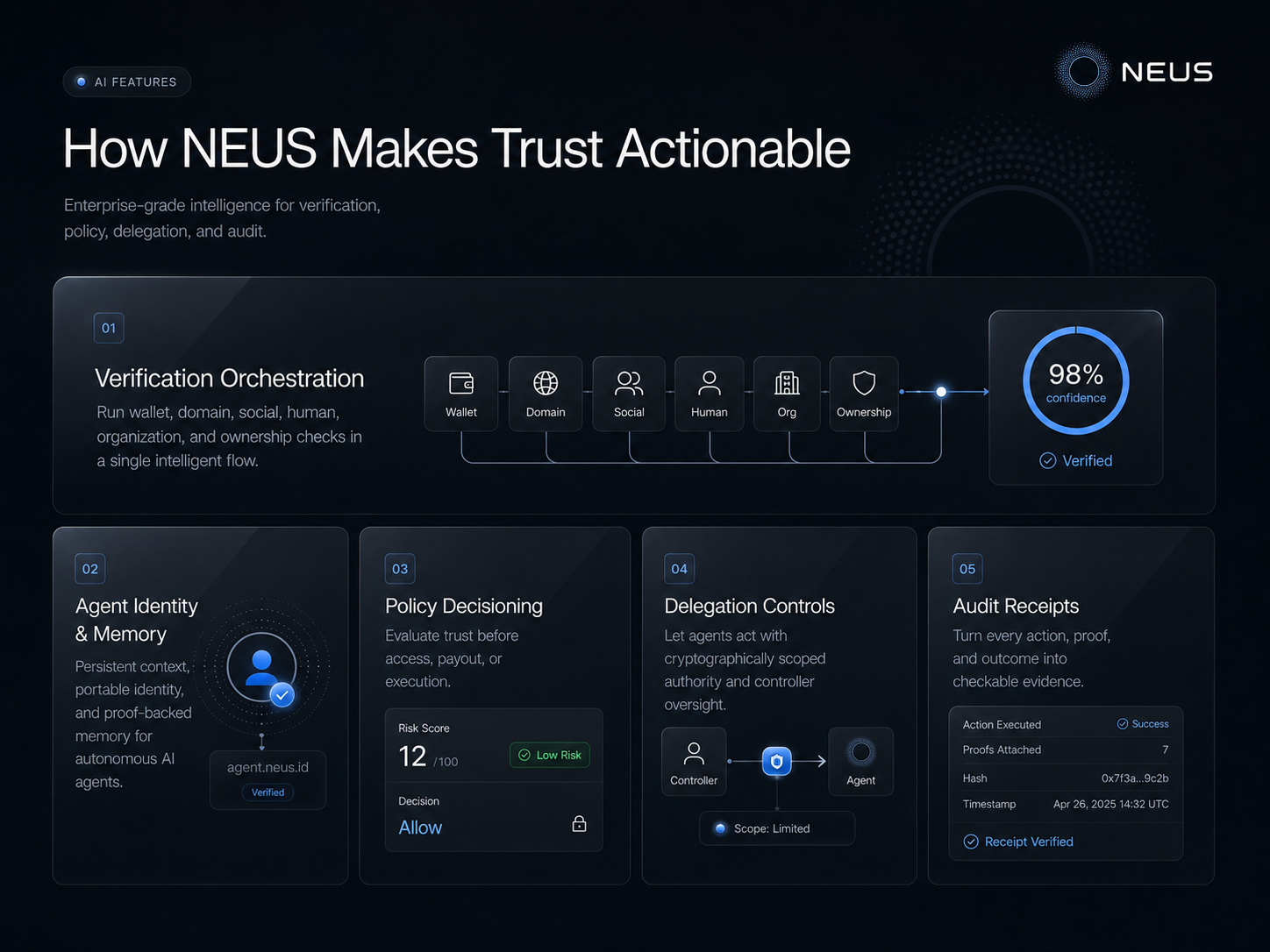
Both Webacy and NEUS are MCP-native, which means AI agents running in Claude, Cursor, or any MCP-compatible framework can access live trust context before they execute. As agents begin acting on behalf of users (routing transactions, interacting with protocols, executing on-chain tasks) the question of who they're dealing with matters as much as what they're doing. Is the wallet on the other side of this interaction clean? Does the agent initiating it have a verified identity and a track record that can be checked? Without answers to those questions, autonomous action is just blind trust.
Webacy's risk signals give agents a live read on wallet exposure and counterparty risk. NEUS gives those signals a portable, verifiable form that any agent or app can check before acting. Together they make agent-to-agent and agent-to-wallet interactions something that can actually be audited and trusted, not just hoped for.
How the Check Actually Works
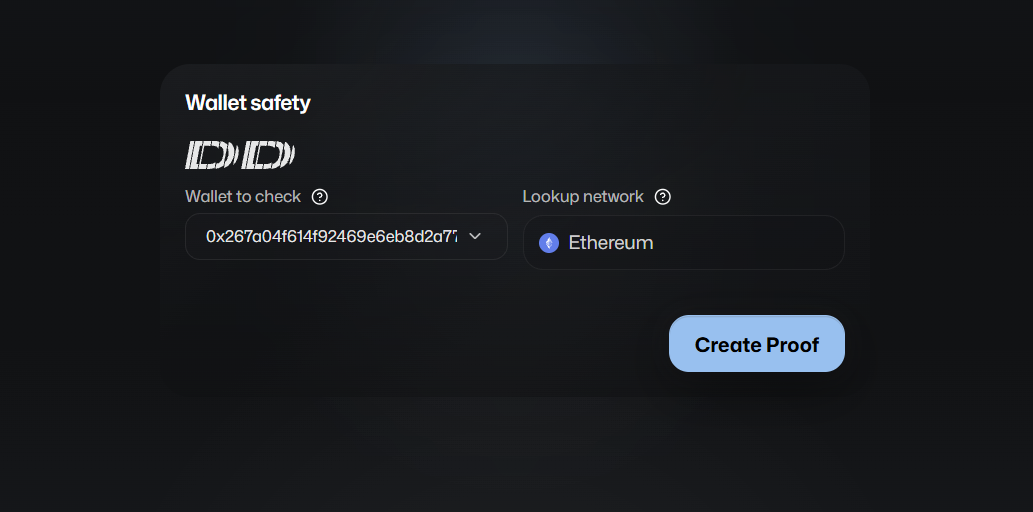
The wallet risk check is built directly into the NEUS onboarding flow. You don't go looking for it separately. Here's what happens:
- During onboarding, NEUS walks you through a wallet risk step powered by Webacy. You connect your wallet, run the check, and set your privacy preferences.
- The result gets recorded as a proof record on your NEUS profile: not just a score that disappears, but a verifiable, timestamped receipt tied to your identity.
- If your wallet's risk profile changes later (new flags, new exposure), you rerun the check and the receipt updates. Apps that read NEUS receipts always see the current state, not a stale snapshot.
The receipt can be combined with other proofs on your NEUS profile: domain ownership, social verification (X, LinkedIn, Discord), org affiliation, and agent authority. The wallet risk check is one layer in a trust bundle, not a standalone product.
In Production Today
This is live:
- Wallet risk checks run through Webacy inside NEUS verification flows
- Public NEUS profiles can display the Webacy-backed safety result
- Builders can include wallet risk alongside identity, ownership, and agent authority in the same trust bundle
- Both platforms are MCP-integrated; agents can query trust context before any action
The gap we're closing is a structural one: strong risk intelligence should compound across the ecosystem, not restart at every gate.
Check your wallet and get a portable trust receipt: neus.network/verify
Build with Webacy: dd.xyz | Build with NEUS: docs.neus.network