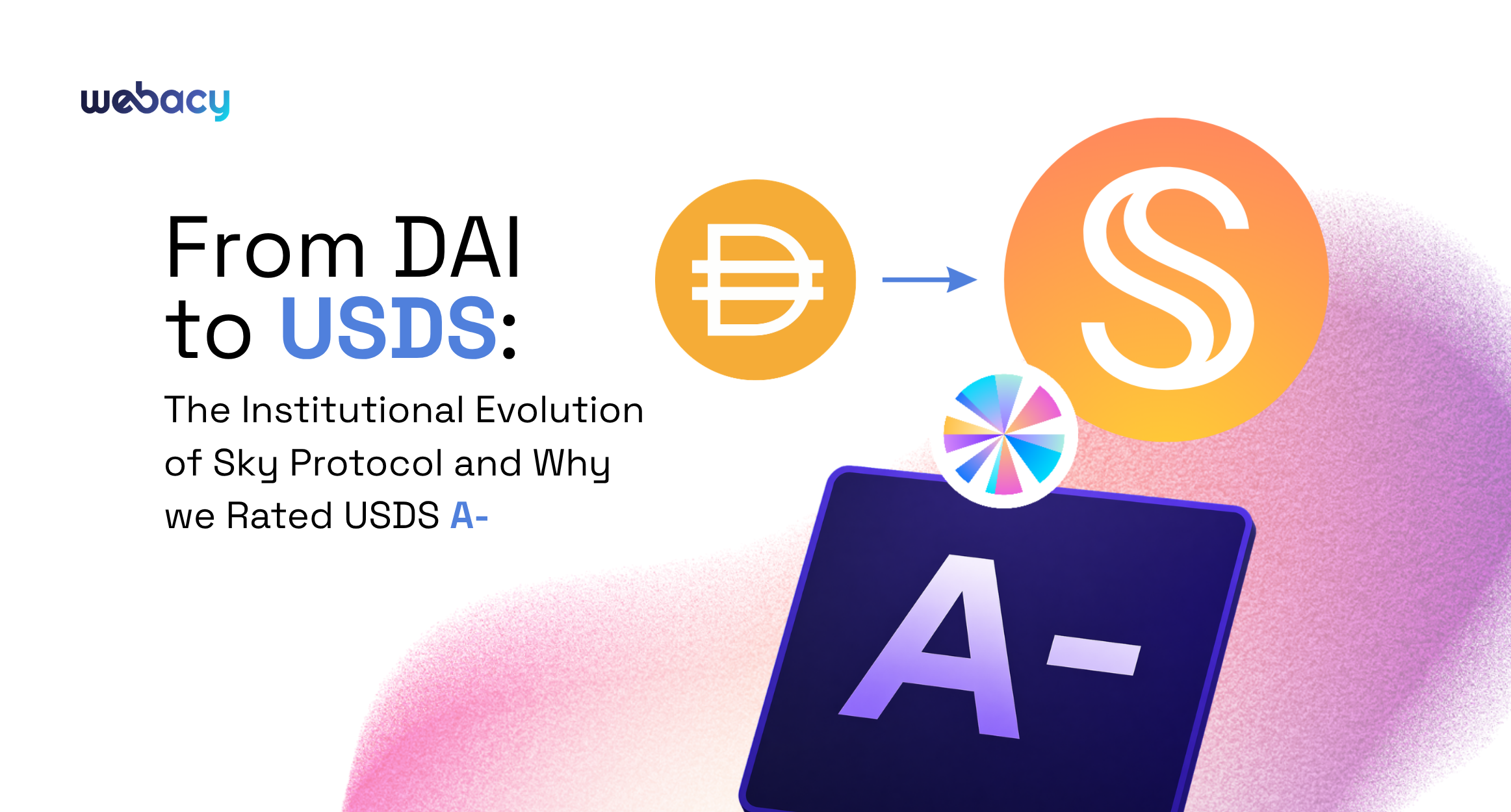
The decentralized finance landscape is witnessing a generational shift as MakerDAO, the pioneer of on-chain overcollateralized stablecoins, completes its "Endgame" transformation into Sky. Central to this evolution is the transition from the legendary DAI stablecoin to its successor, USDS (Sky Dollar).
While DAI paved the way for decentralized money, USDS is designed to be the foundational settlement layer for a world where traditional finance and DeFi converge.
What are Sky and USDS?
Sky (formerly MakerDAO) is the rebranded ecosystem behind the world’s most established decentralized stablecoin protocol. For nearly a decade, MakerDAO operated as the gold standard of DeFi, proving that crypto-collateralized assets could maintain stability without a centralized custodian.
USDS is the upgraded version of DAI. It retains the core principles of its predecessor (transparency, overcollateralization, and decentralization) while introducing advanced features for a multi-chain, institutional future. Holders of USDS gain access to the Sky Savings Rate (SSR) and Sky Token Rewards (STRs), allowing them to earn native yield directly within the ecosystem without the complexity of traditional staking.
What the Transition Means
The move from DAI to USDS is more than a name change; it is an upgrade to the protocol’s technological architecture.
- 1:1 Seamless Upgrade: DAI holders can migrate to USDS at a 1:1 ratio with zero fees, retaining the exact same dollar value while gaining access to the new Sky ecosystem.
- Governance Evolution: Alongside USDS, the protocol introduced SKY, the successor to the MKR governance token, designed to streamline decision-making and broaden participation through a 1:24,000 split.
- Enhanced Utility: USDS is built for SkyLink, a cross-chain infrastructure that allows the stablecoin to move natively between Ethereum and Layer 2s like Arbitrum and Base without the risks associated with traditional bridges.
Purpose: The Institutional Stablecoin
USDS was built to solve the "risk problem" for institutional participants. While purely algorithmic stablecoins are prone to fragility, and centralized stablecoins rely on corporate bank reserves, USDS offers a transparent, on-chain alternative.
The purpose of USDS is to serve as institutional-grade liquidity. By incorporating features like a freezing function for theft prevention and a focus on regulatory adaptability, Sky is positioning USDS as the safe-haven asset for corporate treasuries, RWA (Real World Asset) platforms, and cross-border settlement. The protocol’s financial resilience is backed by robust revenue and a healthy surplus buffer, making it one of the most stable entities in the space.
DD Digital Asset Ratings: Why USDS is "Healthy"
At Webacy, we believe that trust should be verified by data, not just reputation. As of April 20, 2026, our real-time monitoring systems have assigned USDS a 0/100 Risk Score across all major deployments, the highest possible rating for structural health.
USDS Structural Health Report (Cross-Chain)

Key Insights from the Data:
- Cross-Chain Peg Stability: Our systems show USDS tracking precisely within its expected range of $0.99 – $1.01 on all chains. Prices on Ethereum ($0.9996), Arbitrum ($0.9997), and Base ($0.9995) demonstrate consistent arbitrage and liquidity efficiency.
- Institutional Liquidity (ETH): Ethereum remains the primary liquidity hub for USDS with a High Liquidity Tier rating. With 24h volumes exceeding $251 million, it is currently the most viable chain for large-scale institutional settlement.
- Emerging Ecosystems (ARB & BASE): While risk scores are identical (0/100) across all chains, the liquidity profile varies. Base shows a healthy Medium Tier growth pattern, while Arbitrum currently represents an "Emerging" liquidity profile. This distinction is vital for treasury managers deciding where to deploy capital for immediate vs. long-term yield.
- Contamination Risk: Our analysis confirms that USDS is currently free from significant contamination risk. While other assets in the market have faced cascading exposure, USDS remains isolated from systemic fragility.
The Standard Has Changed
The transition to USDS marks a major leap forward for DeFi. By combining the trusted model of DAI with the scalability and yield opportunities of the Sky Protocol, USDS is setting a new standard for decentralized money.
For institutions looking to deploy capital on-chain, USDS isn't just a stablecoin—it’s a structurally sound infrastructure for the future of finance.
View the full USDS Real-Time Rating at https://dapp.webacy.com/dyor/address/0xdc035d45d973e3ec169d2276ddab16f1e407384f?chain=eth&mode=economics.
This article was compiled using real-time data from the Webacy Digital Asset Ratings engine. Our continuous monitoring helps institutions identify structural fragility before it becomes a market event.